Medaka Varieties: A Guide to Japan's Rice Fish Types
Japan has turned one small, plain fish into a national craft. The medaka (the Japanese rice fish, Oryzias latipes) was once just the silver-brown minnow of the rice paddies. Today enthusiasts count more than 450 named varieties, and new ones appear every breeding season, sold at prices that can rival koi.
This guide is not all 450-plus. It is a careful tour of the 35 varieties we keep in our own database at Tokyo Aqua Garden, chosen because together they show how the naming system works. Learn to read these, and when you meet a strain we haven't listed, you'll still be able to decode its name and picture the fish.
Almost every fish below shares one easy care profile, and the differences that drive the high prices are cosmetic: color, the sparkle of the scales, the length of the fins, and the shape of the body and the eyes. Those are the five axes a Japanese strain name is built from. Learn them and the catalog stops being a wall of foreign words.
How to Read a Medaka Name
 Japanese medaka names look intimidating in English, but they are built from a small, logical vocabulary. Written in Roman letters (Hepburn romanization), a long "o" is often spelled ou or oo, so Youkihi and Koutei are pronounced "yoh-kee-hee" and "koh-tay." Names then stack traits from left to right: a color or pattern, then the scale type, then the fin type, then the body type. "Sanshoku Lamé Hire-naga" is simply three-color + sparkle scales + long fins, all in one fish.
The core vocabulary: Once these click, you can parse a strain name you've never seen.
| Example | Japanese | Reading | Meaning | What it tells you |
|---|---|---|---|---|
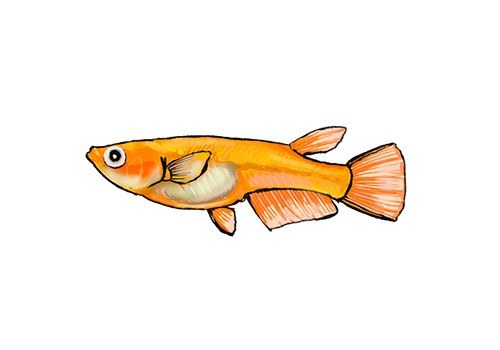 | 楊貴妃 | Youkihi | "Yang Guifei," a Tang-dynasty imperial consort and a byword for beauty | A vivid orange body |
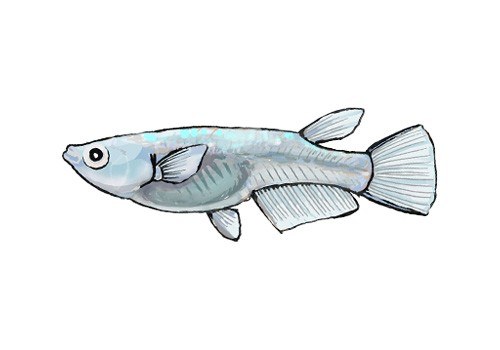 | 幹之 | Miyuki | a personal name | An iridescent stripe of light running down the back (taigaikou, 体外光) |
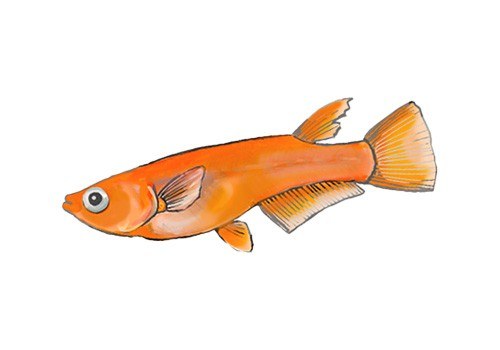 | 紅帝 | Koutei | "Crimson Emperor" | A deep, fixed red |
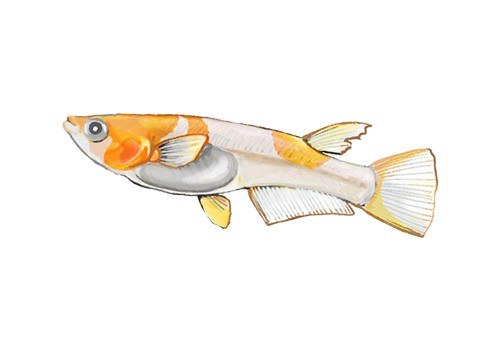 | 紅白 | Kouhaku | "red and white" | Red-and-white patterning, as on koi |
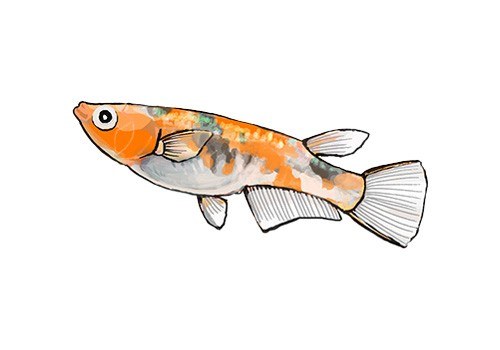 | 三色 | Sanshoku | "three colors" | Red, white and black mottling |
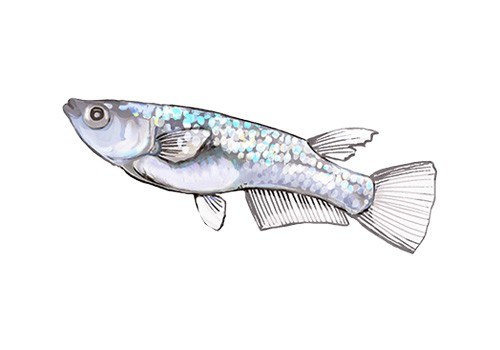 | ラメ | Lamé | from the French for a metallic thread | Glittering guanine spangles across the scales |
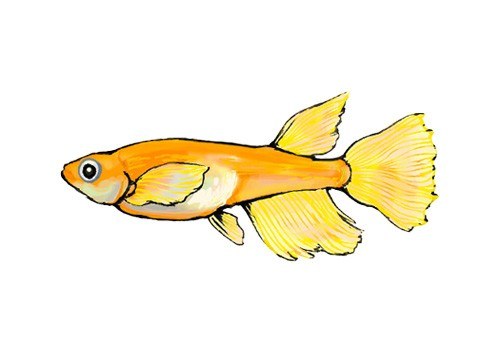 | ヒレ長 | Hire-naga | "long fin" | Flowing, elongated fins |
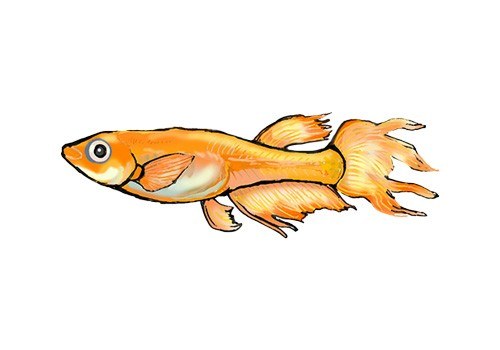 | スワロー | Swallow | English, after the bird | Extended, split fin rays |
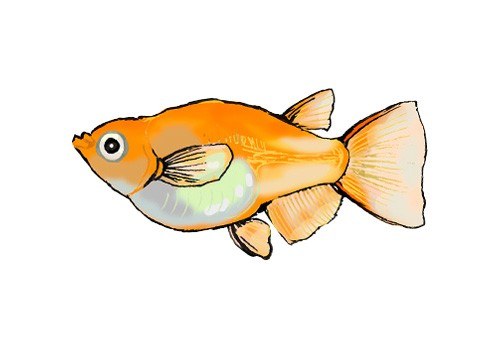 | ダルマ | Daruma | after the round Daruma doll | A short, stubby, rounded body |
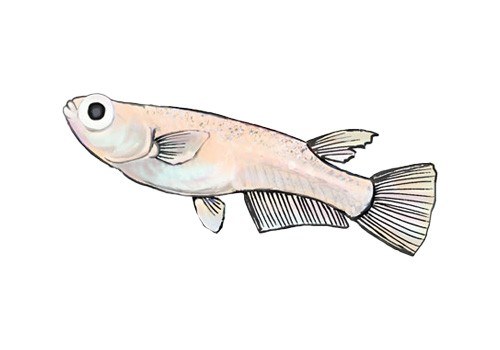 | 出目 / 水泡眼 | Deme / Suihougan | "protruding eye" / "water-bubble eye" | Modified, showy eyes |
The specs here come from the species database we maintain for our own work. It records a care profile for every fish, and a price and a difficulty rating for some of them, which we include where we have them. Japanese prices are converted to dollars only to give a sense of scale; US prices are different, as explained near the end.
The Orange and Red Line: Youkihi and Its Relatives
Color is where modern medaka breeding began, and orange is its signature. This group is the reason a paddy minnow became a collector's fish.
Youkihi (楊貴妃). Named for Yang Guifei, the legendary Tang-dynasty beauty, this is the vivid orange medaka that defined the modern hobby. In our experience it is also one of the most beginner-friendly: its color passes to nearly all of its fry, the young start pale and deepen to orange only as adults, and it is hardy enough that breeders use it as a base for other strains. Difficulty ★☆☆☆☆ · in Japan, roughly $1 and up · 3–4 cm · 23–28°C (73–82°F).
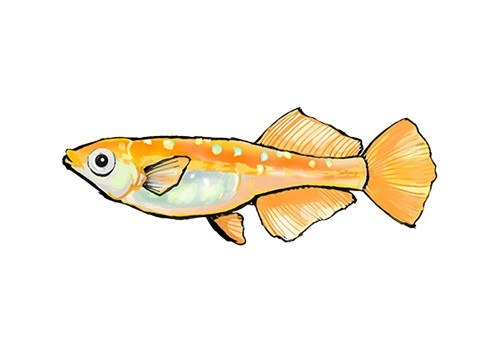 Youkihi Hikari (楊貴妃ヒカリ). "Hikari" means "shining." In a Hikari-body fish the metallic sheen of the belly extends over the back as well, making the body look symmetrical top-to-bottom, with a diamond-shaped tail. Here it's carried on the orange Youkihi color.
Koutei (紅帝). "Crimson Emperor." A selectively deepened, fixed red developed within the Youkihi lineage. Where Youkihi is orange, Koutei pushes toward a saturated scarlet.
Kouhaku (紅白). "Red and white," the same term used for the classic koi pattern. Red markings over a white body.
Three-Color / Sanshoku (3色). Red, white and black in a mottled pattern. Because the markings appear almost at random, a well-marked fish is hard to reproduce deliberately, which makes this one of the pricier standard colors. Keeping it is easy; showing off its color takes more care. We keep ours over a dark substrate in a black container, which makes the pigment look richer. Difficulty ★☆☆☆☆ · in Japan, roughly $3 and up.
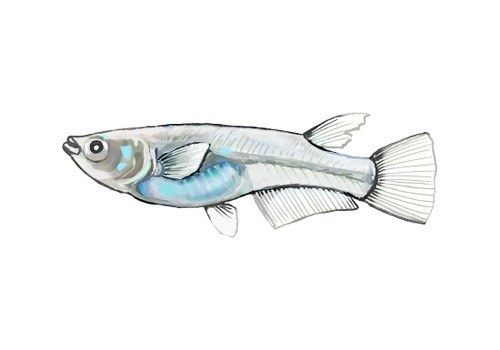 Shinkai (深海). "Deep sea." A subdued, translucent-scaled strain with a cool blue cast, like water far below the surface.
The Miyuki Line: A Shimmer Down the Back
If orange was the first revolution, the 体外光 (taigaikou, "external light") was the second. This is a band of light-reflecting guanine that runs along the top of the fish, so it seems to glow from above, which is the angle you see a fish from in a Japanese outdoor bowl.
Miyuki (幹之). The strain that made the shimmering back famous. The iridescent stripe is graded by how far it extends: a spot of light, a partial line, a strong line, or "full body" where it runs nose to tail. Miyuki's shine became the foundation for many of the blue and sparkling strains that followed. Lifespan recorded as about 1–3 years.
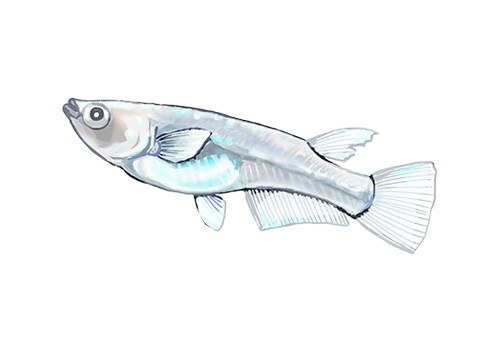 Marine Blue (マリンブルー). A cool, steel-blue metallic strain that carries the Miyuki shimmer into a marine-blue tone.
Body Shape: The Daruma and Semi-Short Bodies
The Daruma body, named after the round, weighted Daruma doll, is a compressed, stubby shape with the same number of vertebrae packed into a shorter frame. It is charming and much sought after, but the trait is more delicate: our database records warmer target temperatures for these fish, because the short body is best expressed and best maintained in warm water.
Youkihi Daruma (楊貴妃ダルマ). The orange Youkihi color on a short, round Daruma body. Kept warm: 28–30°C (82–86°F).
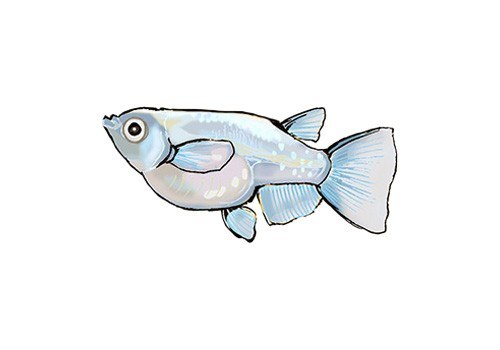 Miyuki Daruma (幹之ダルマ). The shimmering Miyuki back on a Daruma body. Target 25–28°C (77–82°F).
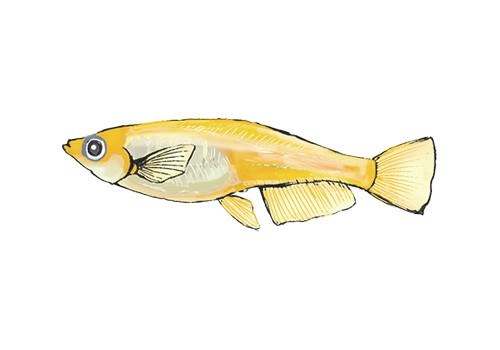 Maruko (マルコ). A rounded, semi-short-bodied fish, between a normal medaka and a full Daruma.
Long Fins and Swallows: The Flowing Types
The other structural axis is the fins. Hire-naga ("long fin") and Swallow (elongated, split rays) turn a brisk little fish into something that trails like a veil. These are prized display fish; the long fins ask for clean water and calm tankmates, and heat can intensify the finnage.
Youkihi Long-fin (楊貴妃ヒレ長). Orange Youkihi color with drawn-out fins. Despite the fancy look, our database rates it beginner-easy. Difficulty ★☆☆☆☆.
Youkihi Swallow (楊貴妃スワロー). The Swallow fin trait, where the fin rays extend into forked points, carried on the orange color.
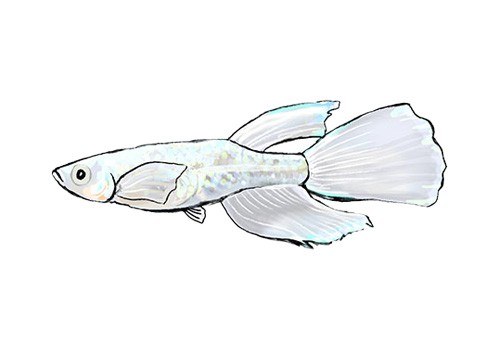 Tennyo no Mai (天女の舞, Matsui long-fin 松井ヒレ長). "Dance of the Celestial Maiden." One of the foundational long-fin strains, named for the way its fins seem to float and sway. The Matsui line is a well-known source of long-finned medaka.
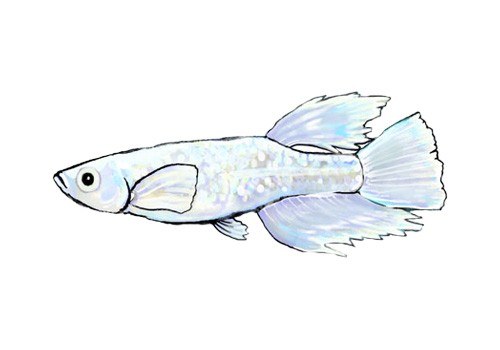 Mariage Long-fin (マリアージュロングフィン). "Mariage" is French for "marriage." A full-finned strain whose fins grow lushest in warmth. Our records show that keeping it above 28°C (82°F) produces fuller, plume-like fins.
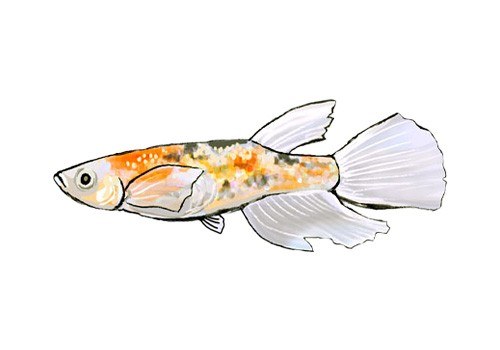 Three-Color Lamé Long-fin (3色ラメヒレ長). The name describes the fish: a three-color pattern, sparkling lamé scales, and long fins. That combination, plus its scarcity, makes it one of the most expensive strains we list, and it takes a little more care. As with the three-color, a black container keeps its color vivid. Difficulty ★★☆☆☆ · in Japan, roughly $10 and up.
Lamé: The Glittering Scales
Lamé (from the French for metallic thread) describes bright, jewel-like guanine spangles scattered across the scales, so the fish looks dusted with glitter. It combines with almost any color, which is why this is the fastest-growing corner of the hobby.
Sapphire (サファイア). A blue-toned lamé strain, named for the gemstone its scales evoke.
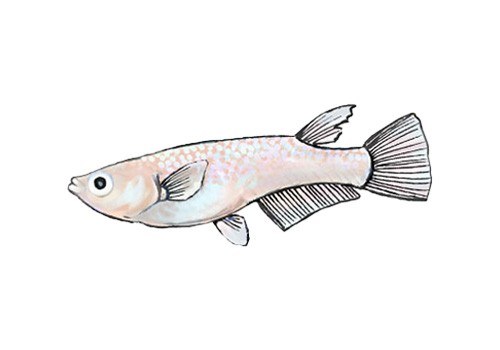 Pink Sapphire (ピンクサファイア). A softer, pink-hued take on the Sapphire, with the same glittering scales.
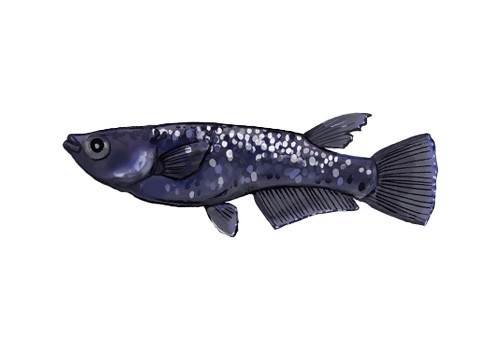 Black Diamond (ブラックダイヤ). Bright lamé spangles set against a dark, black body, for maximum contrast.
When we were stocking named strains into a client's tank, our aquarist noted that the one Black Diamond had poor color, so we could not be sure it was actually that strain. Ten whitish fish in the same batch had not yet been identified by strain at that point.
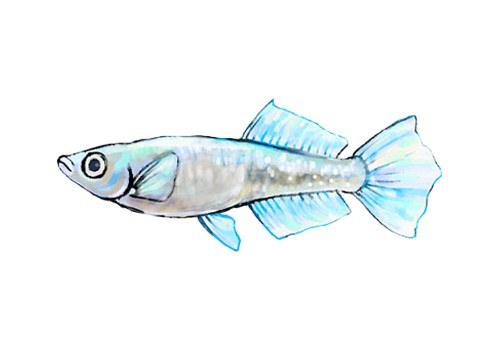 Dragon Blue (ドラゴンブルー). A deep blue strain with a metallic, scaled look that gives it the "dragon" name.
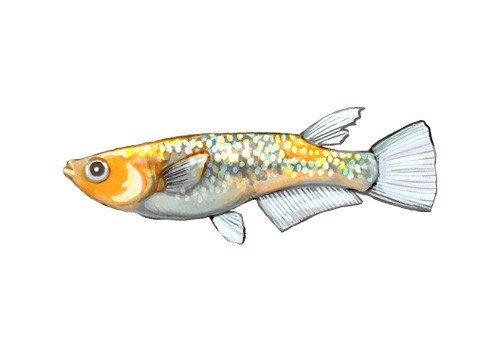 Aurora Yellow Lamé (オーロラ黄ラメ). "Aurora" refers to a translucent-scaled base; here it comes in yellow (ki, 黄) and dusted with lamé.
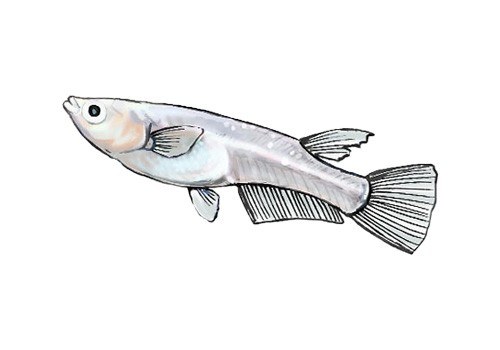 Hyakushiki (百式). The name reads literally as "Type 100." A bright, heavily-lamé strain.
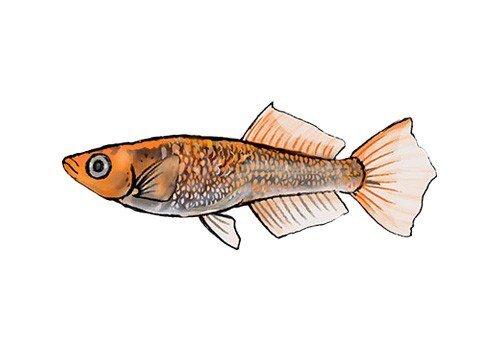 Black Rim (ブラックリム). Named for scales edged, or "rimmed," in black, giving the body a fine netted outline.
Eye Variations
The last axis is the eyes themselves. Some of these echo classic goldfish mutations, and the most modified ones are the most delicate. Showy eyes can mean slightly weaker sight and a need for gentle, hazard-free tanks.
Deme (出目). "Protruding eye." Eyes set outward from the head, much like a telescope goldfish (demekin).
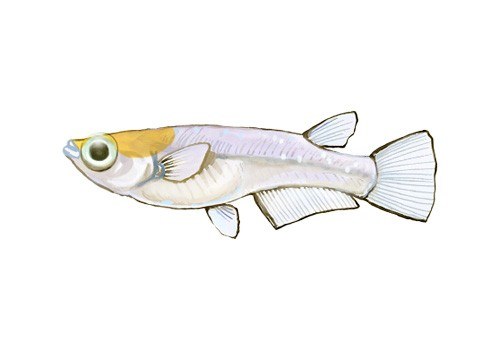 Suihougan (水泡眼). "Water-bubble eye." Fluid-filled sacs sit beneath the eyes, far subtler in medaka than in the bubble-eye goldfish that inspired the name. Of the eye types it is still the most delicate, so give it smooth décor with nothing sharp.
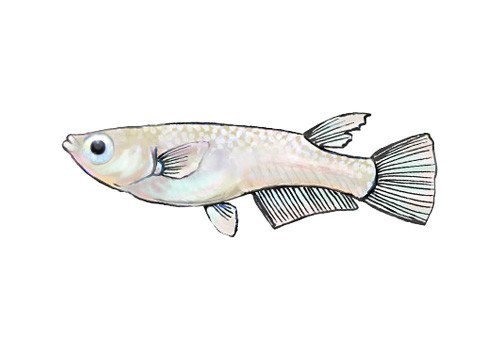 Big Eye (ビッグアイ). Enlarged eyes that give the face an alert, oversized look.
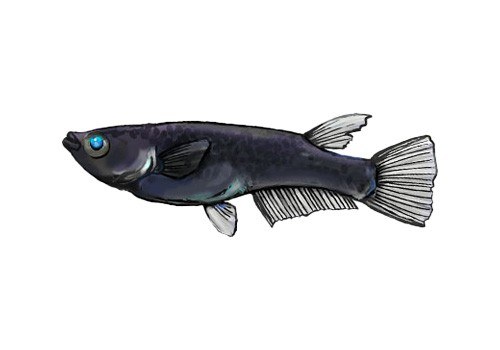 Blue Eye (ブルーアイ). A distinctive blue iris, uncommon among rice fish.
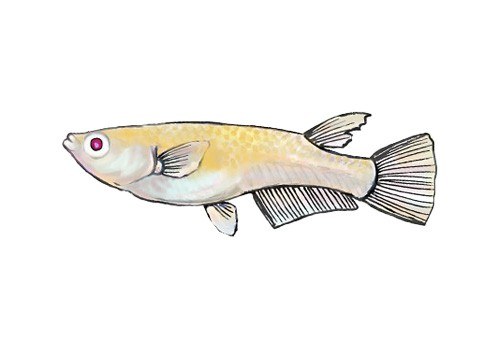 Ruby Eye (ルビーアイ). Red eyes, the result of reduced eye pigment, often paired with pale bodies.
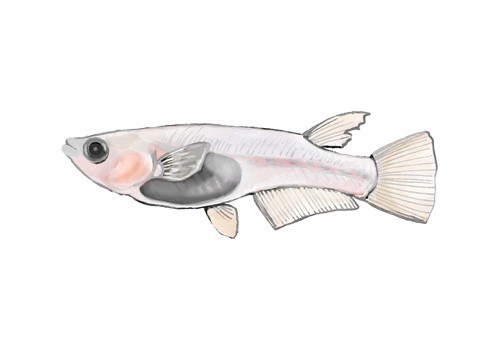 Panda (パンダ). Solid black eyes against a pale body, the contrast behind the "panda" name.
The Foundation: Wild Type and Base Colors
Every strain above traces back to these. They are the hardiest and the cheapest, and for a beginner they are often the most sensible place to start.
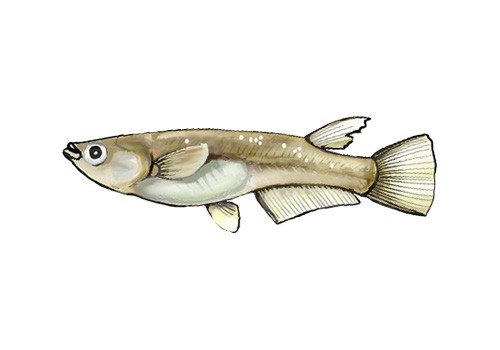 Kuro / Wild Black (黒メダカ). The original wild-type coloring of Oryzias latipes: a dark grey-brown that camouflages the fish in a paddy or pond. The ancestor of everything else here.
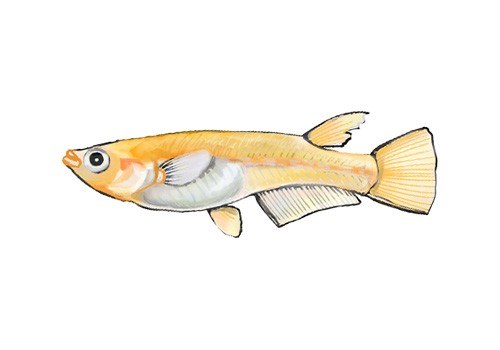 Himedaka (ヒメダカ). The "hi" (緋) means scarlet. This is the classic orange domestic medaka you'll find most easily and cheaply, long sold as a pet and a live food fish. It is the direct forerunner of the refined orange strains such as Youkihi.
On a 2026 visit to a 60 cm (24 in) tank we maintain for a client, Himedaka were sharing the tank with neon tetras, Hasemania, cherry barbs, rummy-nose tetras, zebra danios and platies. The water measured 25°C (77°F), and we found no problems.
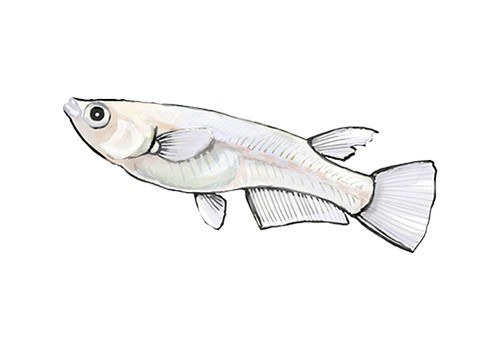 Shiro / White (白メダカ). A clean white-bodied medaka, striking in a dark container.
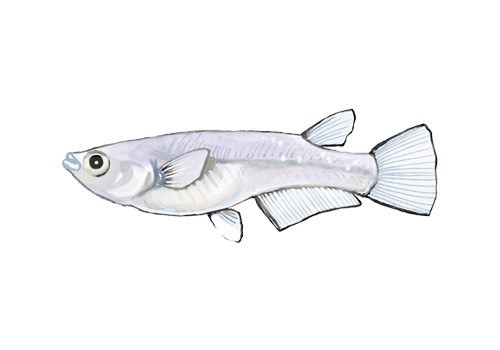 Ao / Blue (青メダカ). A soft grey-blue, produced by the absence of one pigment type. Subtle, and a common parent for bluer strains.
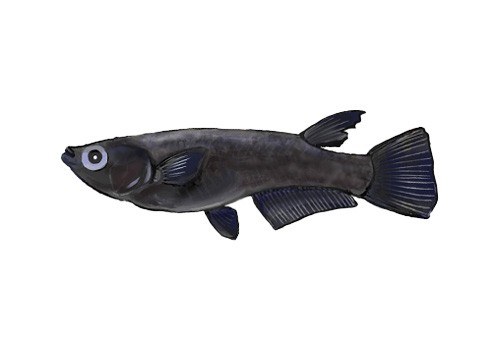 Black (ブラックメダカ). A selectively deepened black, darker and more uniform than the wild-type Kuro it descends from.
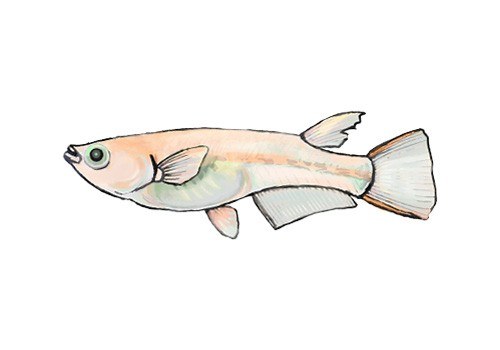 Pink (ピンクメダカ). A pale, pinkish fish whose reduced pigment lets the flesh tone show through.
How to Get Medaka in the United States
Medaka are far more established in Japan than in the West, but the US hobby is growing quickly. A few practical notes:
- Look under "ricefish." In English, medaka are increasingly sold as "ricefish" or "Japanese ricefish," alongside the scientific name Oryzias latipes. Searching only for "medaka" can miss listings that use the English term.
- Specialty breeders, not big-box stores. The colored strains are almost entirely the work of dedicated hobbyist breeders. In the US you'll usually find them through small breeders, aquarium-society auctions, and online sellers and hobbyist groups, rather than on a general pet-store shelf.
- Expect higher prices and limited selection. Because US stock is bred in smaller numbers and imports of live fish are tightly controlled, the fancy strains cost considerably more than the Japanese figures above, and many varieties simply aren't available yet. The foundational colors are the easiest and cheapest to find.
Three Good Varieties for Beginners
The strains we rate easiest, at one star (★☆☆☆☆), are the safest starting points:
- Youkihi (楊貴妃). The best first medaka: cheap, hardy and brightly colored, and it breeds true, so your fry look like their parents. If you buy only one fish from this guide, make it this one.
- Youkihi Long-fin (楊貴妃ヒレ長). The same easy Youkihi temperament with flowing fins, rated one star despite its fancier appearance.
- Three-Color / Sanshoku (3色). Rated one star to keep, and a beautiful fish. The catch is that its pattern is hard to reproduce, so it costs more; but as a fish to own and enjoy, it's beginner-friendly.
Two fish our database leaves unrated deserve a mention here too: the plain Himedaka and Wild Black (黒メダカ) are the traditional, nearly indestructible starter fish that generations of Japanese schoolchildren have raised. If you want the most forgiving fish possible, start there and move up to the fancier strains once you've raised a batch of fry.
FAQ
- Q. Are medaka the same as killifish?
- A. No, though they're often shelved together. Medaka (Oryzias latipes) are rice fish, a separate lineage from the true killifishes. That's why the English hobby has settled on "ricefish" as their name. Unlike some killifish, medaka are not annual, soil-spawning fish; they scatter eggs onto plants and can live for years.
- Q. How are they different from guppies?
- A. The big difference is reproduction: guppies are livebearers that give birth to free-swimming young, while medaka lay eggs. Guppies are tropical and generally want a heater; medaka are temperate and hardy, tolerating a wide temperature range and cool water that would stress a guppy. They belong to different fish families.
- Q. Can I keep medaka outdoors?
- A. In Japan this is the classic way to keep them, in bowls, tubs and container "biotopes," often year-round. They tolerate a broad temperature range and can overwinter as long as the water doesn't freeze solid. Whether it's practical (and permitted) where you live depends on your climate and local regulations, so check both before setting up an outdoor container.
- Q. How long do medaka live?
- A. Typically about 2–3 years, which is what our database records for most of these strains; a few, such as Miyuki, are noted at roughly 1–3 years. Steady temperatures, clean water and not overbreeding your females all help them reach the longer end of that range.