The Japanese Salt Bath (Ensui-yoku): A Complete Guide
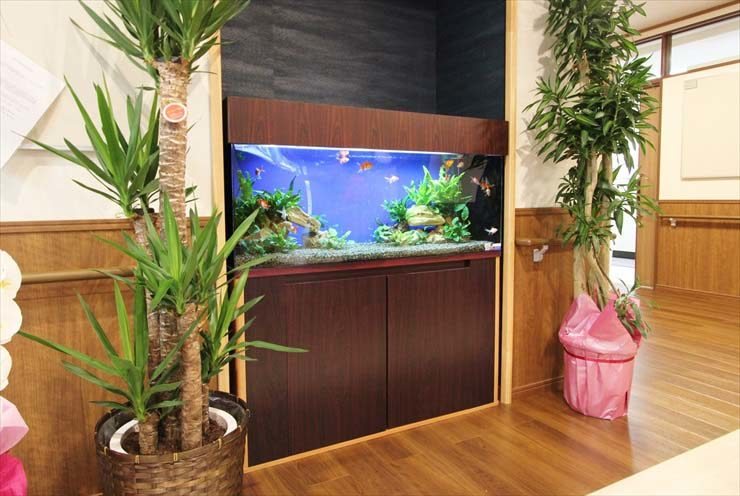
Your goldfish is off. It sits on the bottom with clamped fins, ignores food, or came home from the store looking exhausted. In Japan, what a fishkeeper does at this moment has a name: ensui-yoku (塩水浴), the salt bath. A short, precisely measured course of 0.5% salt water in a separate container, it has been the default first response of Japanese goldfish keeping for generations; the same principle serves medaka, bettas, and most other freshwater fish.
This guide is for that situation. It is not for a fish with dissolving fins, open sores, or severe bloat; advanced disease needs medication now (the handoff point is below). Nor is it a routine tonic for healthy tanks. Done correctly, the salt bath is gentle, cheap, and effective. Done casually, it can finish off a struggling fish.
Why Salt Helps a Sick Fish
A goldfish's body fluids sit at roughly 0.9% salinity; its water is close to 0%. Osmosis pushes water toward the saltier side, so fresh water soaks into the fish around the clock, the way salt pulls moisture out of sliced cucumbers. A healthy fish copes: the slime coat slows the inflow, the kidneys pump the excess out as dilute urine. That work costs energy every hour.
In a weakened fish, that background workload becomes a real burden. At 0.5% the osmotic gap nearly closes; the fish spends far less on regulation and more on healing. The minerals support recovery, and salt mildly suppresses some bacteria and parasites. Know the limits: the killing power is weak. A salt bath is recovery support and a bridge to medication, not a sterilizer.
0.5% Is Five Times What Your Salt Package Says. Here's Why
To anyone who has read a US aquarium salt package, the Japanese dose looks alarming. A typical label suggests about one tablespoon per 5 gallons, roughly 0.1%, added to the display tank as a general tonic. The ensui-yoku is about five times stronger. Both use the same plain salt; they are otherwise two different treatments.
| US label dosing | Japanese ensui-yoku | |
|---|---|---|
| Strength | ~0.1% (1 tbsp / 5 gal) | 0.5% (19 g / gal, 5 g / L) |
| Where | Often the display tank | Separate container only |
| Duration | Ongoing | About 1 week, with daily water changes |
| Purpose | General tonic | Therapeutic bath for a sick fish |
| Measured how | By the spoon | By the gram, on a scale |
The strength works precisely because it is temporary and contained. Never bring a display tank to 0.5%: plants, filter bacteria, and salt-sensitive tank mates would all pay for it.
Measurement is where attempts quietly fail. 0.5% means 5 grams of salt per liter, or 19 grams per gallon; a 10-liter bucket (about 2.6 gallons) takes exactly 50 grams. Weigh it. A tablespoon of coarse salt holds only 14–17 grams, so spoon dosing lands short while feeling precise. A $10 kitchen scale ends the guessing.
When to Use a Salt Bath, and When Not To
A salt bath earns its keep in the early, vague stage of trouble, before disease has declared itself:
- General lethargy: clamped fins, sluggish swimming, lost appetite, no obvious lesions
- Early gill disease (labored breathing, gills not yet visibly damaged)
- Early fin rot or early red-spot marks on the body
- Exhaustion after transport, including newly bought fish
- Early swim bladder trouble (a special protocol, covered below)
Before you reach for the salt, check the thermometer. Below 59°F (15°C) goldfish naturally slow down and stop eating; in an unheated winter tank that is normal metabolism, not illness.
Choose a different tool when:
- The infection is advanced. Severe fin rot, gill disease, or ulcers need antibacterial medication immediately.
- The problem is serious digestive trouble. Warm, clean fresh water does more for digestion than salt does.
- You have no separate container. Salting the display tank is not a substitute; get a bucket first.
Beyond Goldfish
Everything above applies to medaka (Japanese rice fish), bettas, and most freshwater community fish; all freshwater fish carry the same osmotic workload, and goldfish are simply the classic patient. One important exception:
Salt-sensitive species: tetras and other characins, many catfish (including Corydoras), loaches, and some soft-water species tolerate salt poorly. For these, keep the concentration lower and watch closely, or go straight to medication.
What You Need
- A separate container: a clean 3–5 gallon (10–20 L) bucket or spare tank; a second one makes daily water changes smoother
- Plain salt (details below)
- Air pump and air stone: non-negotiable, since the bath runs without a filter
- Thermometer
- Dechlorinator: daily changes burn through it
- Kitchen scale
If a heater is needed, as in the swim bladder variant, use a glass container; heaters can deform plastic buckets.
The Method, Step by Step
| Step | Details |
|---|---|
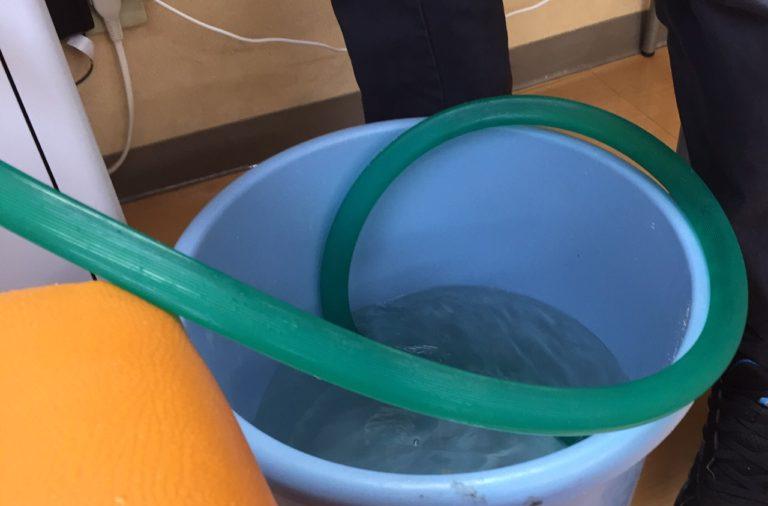
| 1. Prepare the bath | Fill the container with dechlorinated water matched to the tank's temperature. Start the air stone |
| 2. Move the fish | Acclimate it gradually to the container water as you would a new fish, then transfer |
| 3. Weigh the salt | 19 g per gallon (5 g per liter). Weigh the full amount for your container before you start |
| 4. Salt in stages | Dissolve it in three or four portions over one to several hours until the water reaches 0.5%. All at once shocks an already weak fish |
| 5. Change the water | Every day, replace 90–100% with pre-mixed 0.5% salt water at the same temperature. For a very weak fish, a gentler two-thirds change daily conserves strength |
| 6. Run one week | Improving: start the freshwater taper below. Worsening, or unchanged after 7 days: switch to medication |
The big water changes are not optional: with no biological filter, ammonia and shed mucus accumulate fast; fresh pre-mixed salt water keeps the hospital clean.
The salt bath is the standard first response in our maintenance work, and the protocol above is what our aquarists follow: 0.5% by weight, no food, constant aeration, one week. When a salt bath fails, the story usually involves one of two shortcuts: salt that was estimated instead of weighed, or water that sat unchanged until ammonia did more damage than the original illness. The method is forgiving of nervous beginners and unforgiving of guesswork.
Feeding During the Bath
Don't feed. Digestion is a goldfish's weak point, and a stressed fish that eats tends to add digestive trouble to its original problem; uneaten food also fouls the unfiltered container. A healthy-weight goldfish safely goes one to two weeks without food, which covers the bath with room to spare. If treatment runs longer, one or two pellets a day, removing leftovers immediately.
Which Salt to Use

Pure sodium chloride and nothing else. In the US that means plain aquarium salt, or canning and pickling salt whose label reads "salt" with no other ingredients. Avoid iodized table salt, anti-caking agents, seasoned salts, and mineral-rich gourmet salts; the classic mistake in Japan is salt containing nigari (にがり), mineral bittern that can swing pH. Marine salt mix is also wrong here; its buffers are made for saltwater tanks.
A Special Case: Early Swim Bladder Trouble
Goldfish that float helplessly, roll sideways, or bob at the surface have what Japanese keepers call tenpuku-byō (転覆病), literally "capsizing disease." There is no reliable medicine once it is established, which is why the early window matters. When the cause is digestive, a salt bath can help:
- Fast the fish 2–3 days first, to rest its digestive system
- Hold 77–82°F (25–28°C) with a heater in a glass container
- Run a standard 0.5% bath for one week
- No improvement after a week: move to antibacterial medication or consult a specialist
Be honest with expectations: an internal disorder or skeletal cause will not respond to salt.
Ending the Bath: The Return to Fresh Water
Do not lift a recovered fish straight back into the display tank; an abrupt return to fresh water reintroduces the osmotic jolt you spent a week avoiding. Taper instead: each day, replace about half the bath water with fresh, dechlorinated, temperature-matched water and no salt. After 3–4 days the salinity is negligible. Then acclimate the fish back into the display tank as carefully as a new arrival.
A recovering fish's defenses stay low for a while; a slime-coat-supporting water conditioner and stricter-than-usual water quality help here.
If Salt Isn't Enough: Switching to Medication
Three signals end the salt bath phase: clear worsening mid-bath, no change after a full week, or symptoms beyond "early" from the start. Move to a proper antibacterial treatment; our fin rot guide walks through the medication decision for the most common case. Salt and medication are not either-or: many medications run alongside 0.5% salt and the pairing often outperforms either alone, but confirm compatibility on the label first.
Our in-house rule for combining treatments: methylene blue and Green F Gold, along with two other Japanese medications we use, Agten and Elbage Ace, are fine to use alongside salt. The one we flag for caution is Kanpara D, because combining it with salt tilts the pH toward alkaline.