Male or Female Medaka? How to Tell (and Why It Matters)
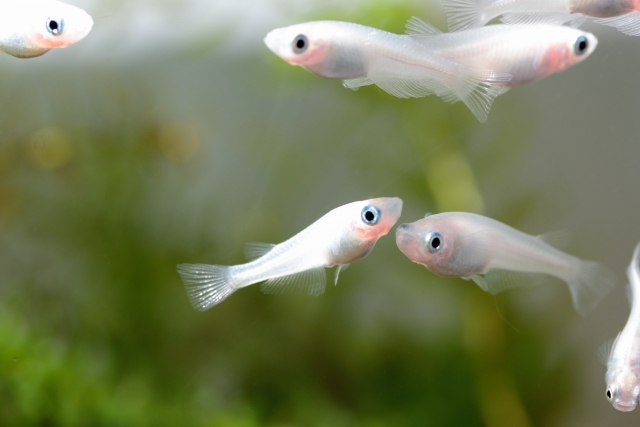
Breeding is half the fun of keeping medaka (Japanese rice fish), so you'll want to know which fish are males and which are females. It comes down to two fins and a belly.
Once you can read those cues, you can start sorting, or senbetsu (選別), by sex, size, and variety. Sorted groups are easier to feed, and you decide which fish breed.
Male vs. Female at a Glance
View the fish from the side, at eye level, and check it against more than one row before you decide.
| Where to look | Male (オス) | Female (メス) |
|---|---|---|
| Dorsal fin sebire (背びれ) | A visible notch, or split, at the base of the fin | No notch; smooth outline |
| Anal fin shiribire (尻びれ) | Long and broad, close to a rectangle or parallelogram | Shorter and slightly rounded, closer to a triangle |
| Body outline | Slender, with a fairly straight line from head to tail | Rounded, with a plump belly |
| Belly in breeding season | Stays slender | Swells further |
| Activity level | Higher; eager at feeding time | Calmer by comparison |
| Breeding-season behavior | Roams the whole tank looking for a mate | — |
| Size at the same age | Often slightly larger | Often slightly smaller |
How to Read Each Part
The Notch in the Dorsal Fin (Sebire)
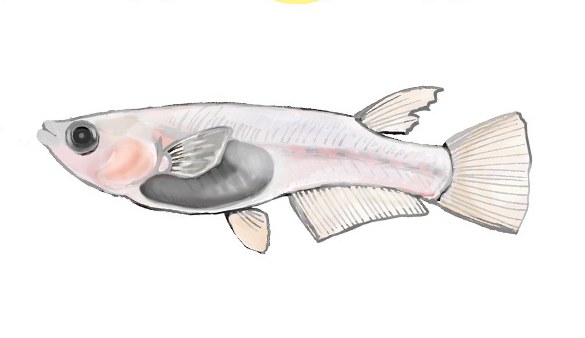
The dorsal fin is the one on the back. A male has a notch at the base of the fin; a female has none.
Anal Fin Shape (Shiribire)
The anal fin sits on the underside, between belly and tail, and the difference here is in size as well as shape. A male's anal fin is long and broad, with a squared-off outline close to a parallelogram. A female's is shorter, slightly rounded, and closer to a triangle.
Body Shape and Belly
Males are slender: seen from the side, the line from head to tail is fairly straight. Females are rounder through the middle, and in breeding season the belly swells further.
Activity and Breeding Behavior
Expect the males to be more active, especially at feeding time, when they eat more eagerly. In breeding season they cruise all over the tank looking for a mate.
When It Is Too Early to Tell
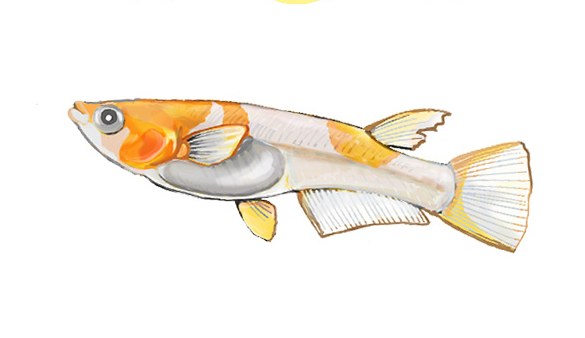
 These differences become clearer as the fish grows, and young or small medaka are hard to sex. The cues stand out once a fish passes about 0.6 inches (1.5 cm) in body length. If you're raising a batch from eggs, give them time. Among fish of the same age, males also tend to be slightly larger.
Side View for Sex, Top View for Size
Japanese medaka culture has two words for how you look at a fish. Yokomi (横見) is the side view, and it is how you sex a medaka, by checking the fins. Uwami (上見) is the top view, looking down into a tub or bowl, and it is how breeders judge body shape and size.
A clear container that is narrow front-to-back makes sexing easier, because it keeps the fish turned sideways to you. Background color matters: view light-colored fish against black and dark fish against white, and the fin edges pop. Move fry and young fish with a small, soft, fine-mesh fry net; a black one also makes patterns and head counts easier to see. A net this small struggles with fish over about 0.8 inches (2 cm), so use a separate net for grown fish.
Why Sort Your Medaka?
Sorting means dividing medaka by growth stage, sex, variety, and health so fish in similar condition can be kept and fed together. If your tub keeps filling up with medaka, sort them even if you never plan to breed.
Fair Feeding and Planned Breeding
Fish born in the same batch don't grow at the same speed, and the small ones go hungry next to bigger siblings. Split them up by size and the little ones get enough to eat, and more of them survive. Give each variety its own container to keep the lines from mixing. Separating males from females stops unplanned spawning: you hatch and raise eggs only when you choose to, and the tub doesn't get overcrowded.
Choosing the Parents
With males and females in separate groups, you can pick the individuals with the best body shape, color, and pattern, then pair them deliberately. As you keep sorting, you learn which parents produce which offspring and can steer the line. Breeders developing new medaka varieties work the same way.
Sorting Out Fish That Cannot Thrive
Health is part of sorting too. Fish with clear genetic problems, such as a bent spine or a tendency to swim vertically, should be separated at the fry stage. They don't live long, and they shouldn't share a container with the healthy fish.
A Simple Sorting Routine
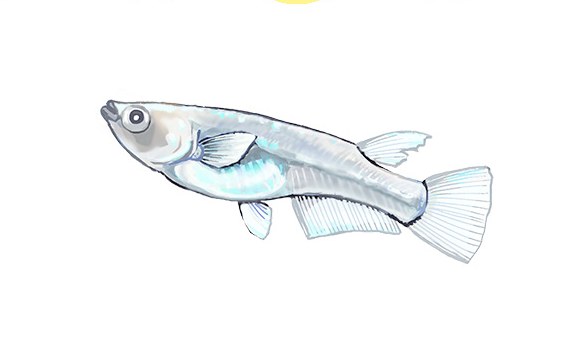
- Wait before sexing. Size sorting can start at the fry stage, but hold off on sorting by sex until the fish are past 0.6 inches (1.5 cm).
- Sort by size from above. Looking down into the container, separate the clearly larger fish from the rest so the small ones get their share of food.
- Sort by sex from the side. Use a narrow container with a contrasting background and check each fish against the table above. If a fish is hard to call, let it grow a little and check again.
- Pull out fish with defects. Remove any vertical swimmers or bent-spined fish you missed at the fry stage.
- Keep the sexes apart until you choose to breed. When you're ready, pair your best candidates.